Introduction: The Enduring Allure of Mars and Perseverance's Mission
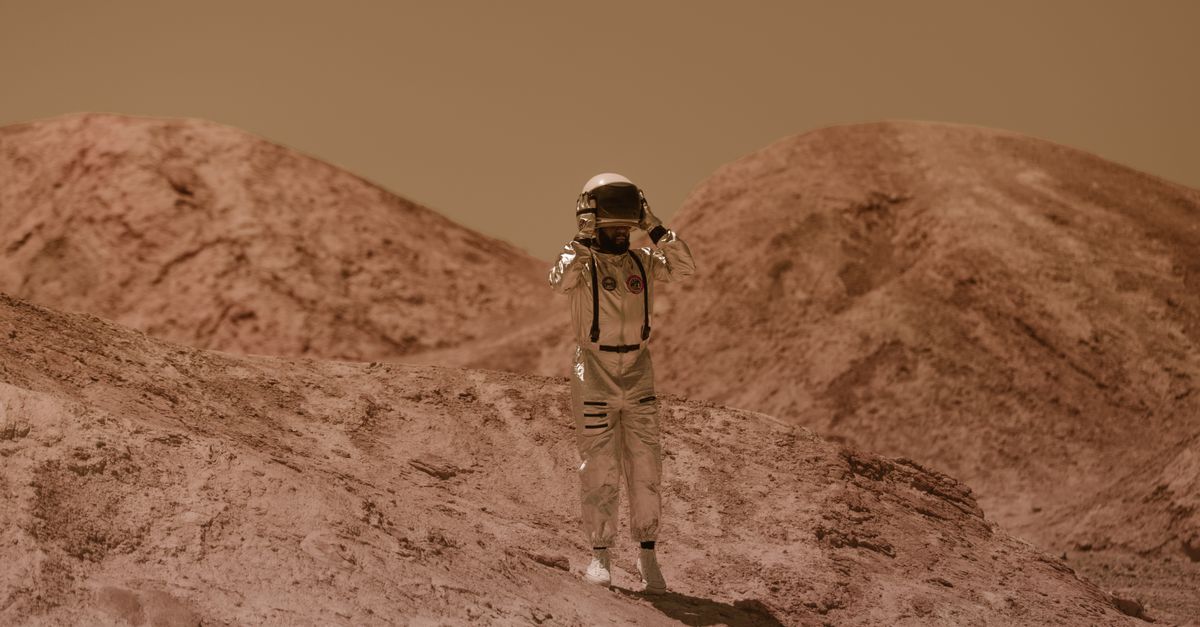
Mars, the enigmatic Red Planet, has captivated humanity for centuries, fueling dreams of extraterrestrial life and future colonization. Its stark, rust-colored landscapes hint at a dynamic past, a world potentially once teeming with liquid water. In this grand cosmic theater, NASA's Perseverance rover stands as humanity's most sophisticated robotic explorer, meticulously traversing the ancient terrain of Jezero Crater since its landing in February 2021. This mission represents a pivotal chapter in Mars exploration, designed not just to observe, but to actively seek definitive evidence of ancient microbial life and pave the way for future human endeavors.
The Perseverance rover mission is a cornerstone of NASA's Mars Exploration Program, building upon decades of scientific inquiry. Its primary objectives are profoundly ambitious: to characterize the geology and past climate of Mars, search for signs of ancient Martian life, collect and cache rock and regolith samples for a future return to Earth, and test technologies for future human exploration. The data gathered by Perseverance is not merely adding to our knowledge base; it is fundamentally reshaping our understanding of planetary habitability and the potential for life beyond Earth.
The Perseverance Rover: A Technological Marvel Exploring Jezero Crater
The Perseverance rover is a testament to cutting-edge space technology and engineering prowess. Weighing over a metric ton, it is equipped with a suite of advanced scientific instruments, each designed to perform specific analyses crucial to its mission objectives. Its robust design allows it to navigate challenging Martian terrain, drill into rocks, and even fly a small helicopter, Ingenuity, which has revolutionized aerial reconnaissance on another planet.
Key Instruments and Capabilities
Perseverance’s scientific payload is a veritable mobile laboratory:
- Mastcam-Z: An advanced camera system with zoom capabilities, enabling high-resolution imaging and video. It provides critical geological context and helps identify potential sample sites.
- SuperCam: Analyzes the chemical composition of rocks and regolith from a distance, using a laser to vaporize small spots and then studying the resulting plasma.
- PIXL (Planetary Instrument for X-ray Lithochemistry): Uses X-ray fluorescence to determine the fine-scale elemental composition of Martian surface materials, aiding in the search for biosignatures.
- SHERLOC (Scanning Habitable Environments with Raman & Luminescence for Organics & Chemicals): Employs Raman and fluorescence spectroscopy to detect organic molecules and minerals, crucial for identifying signs of past microbial life.
- WATSON (Wide Angle Topographic Sensor for Operations and eNgineering): A high-resolution imager for detailed close-ups of rock textures and drill holes.
- MEDA (Mars Environmental Dynamics Analyzer): Measures atmospheric conditions, including wind speed and direction, temperature, humidity, and dust characteristics.
- MOXIE (Mars Oxygen In-Situ Resource Utilization Experiment): A groundbreaking technology demonstrator that produces oxygen from the Martian atmosphere's carbon dioxide, a vital step for future human missions.
Jezero Crater: A Prime Location for Discovery
The selection of Jezero Crater as Perseverance's landing site was no accident. Scientists identified it as a prime location due to compelling evidence of an ancient river delta that fed into a lake billions of years ago. This environment, characterized by sustained liquid water and sedimentary deposition, offers an ideal setting for preserving potential biosignatures – chemical or structural evidence of past life. The crater's diverse geology, including igneous rocks, sedimentary layers, and carbonates, provides a rich tapestry for scientific investigation, promising insights into Mars' hydrological and climatic evolution.
Unveiling Martian Secrets: Key Discoveries from Perseverance
Since its arrival, Perseverance has delivered a torrent of groundbreaking data, challenging long-held assumptions and revealing new facets of Mars' ancient history.
Geological Insights: Ancient Lakebed and River Delta Evidence
One of the most significant achievements has been the definitive confirmation and detailed characterization of Jezero's ancient lake and river delta system. Imagery and spectroscopic data have shown clear evidence of layered sedimentary rocks, consistent with their formation in a watery environment. The rover has traversed across what were once the bottom sediments of a lake and the edge of a river delta, uncovering rocks that show signs of water erosion and deposition. Analysis of these rocks indicates they formed approximately 3.8 to 3.6 billion years ago, a period when Mars was significantly warmer and wetter. This geological context is paramount for understanding where and how life might have emerged and thrived on the Red Planet.
Organic Molecules and Potential Biosignatures
Perhaps the most tantalizing discoveries involve the detection of organic molecules within the rocks of Jezero Crater. Instruments like SHERLOC have identified a variety of carbon-containing compounds in multiple rock samples. While organic molecules can originate from both biological and non-biological processes (e.g., volcanic activity, meteorites), their presence in environments consistent with past habitability is incredibly exciting. Researchers are carefully studying the distribution and types of these organics, along with associated mineralogy, to discern if they represent true biosignatures – definitive evidence of ancient microbial life. For instance, some detected organics are structurally complex and appear within mineral matrices that could protect them over geological timescales, enhancing their astrobiological significance.
Atmospheric Science and MOXIE's Oxygen Production
Perseverance's mission extends beyond geology and astrobiology to atmospheric science and resource utilization. The MEDA instrument has provided unprecedented detail on Martian weather patterns, dust cycles, and atmospheric conditions, crucial data for future human missions. More remarkably, the MOXIE experiment has successfully demonstrated the ability to produce breathable oxygen from the thin, carbon dioxide-rich Martian atmosphere. MOXIE has consistently generated oxygen during its operational cycles, proving the viability of In-Situ Resource Utilization (ISRU) for rocket propellant and life support. This technological breakthrough is a critical step towards sustainable human presence on Mars, potentially reducing the payload mass required from Earth by thousands of kilograms.
The Quest for Ancient Microbial Life: Interpreting Potential Biosignatures
The search for ancient microbial life on Mars is a complex scientific endeavor, fraught with challenges in interpretation. The detection of organic molecules is a significant step, but distinguishing between abiotic (non-biological) and biotic (biological) origins requires rigorous analysis.
Distinguishing Biosignatures from Abiotic Processes
Scientists employ a multi-faceted approach to differentiate true biosignatures. This includes:
- Morphological Analysis: Looking for characteristic shapes or structures (e.g., microfossils) that are indicative of biological activity.
- Chemical Signatures: Identifying specific organic molecules, isotopic fractionations, or elemental ratios that are strongly associated with life processes.
- Contextual Evidence: Assessing whether the discovered molecules or structures are found in environments that were demonstrably habitable and show signs of sustained energy sources and liquid water.
Perseverance's ability to collect pristine samples for Earth return is paramount here. Terrestrial laboratories possess a far greater analytical capability than any rover, allowing for definitive tests that are impossible to perform on Mars. The presence of specific lipid biomarkers or complex protein precursors, for example, would offer compelling evidence.
Implications of Water-Rock Interactions
The rover's findings have also shed light on the pervasive water-rock interactions within Jezero. Evidence of hydrated minerals, such as carbonates and phyllosilicates, suggests that liquid water persisted for significant periods. These minerals are known to trap and preserve organic matter, making them prime targets for biosignature detection. The chemical energy derived from such interactions could have provided a sustenance mechanism for early Martian microbial life, similar to chemosynthetic ecosystems found deep in Earth's oceans.
Mars Sample Return Mission: The Next Frontier in Martian Science
The ultimate goal of Perseverance's sample collection is the ambitious Mars Sample Return (MSR) mission, a multi-agency effort involving NASA and the European Space Agency (ESA). This mission is widely considered the highest priority in planetary science.
Collecting and Caching Samples
Perseverance has been systematically drilling core samples from scientifically compelling rocks and regolith, sealing them in ultra-clean tubes. As of late 2023, the rover has cached over 20 such samples, strategically chosen to represent the diverse geological history and potential habitability of Jezero Crater. These samples include igneous rocks for precise dating, sedimentary rocks for evidence of ancient aqueous environments, and regolith for understanding surface processes.
The Journey Back to Earth and Laboratory Analysis
Scheduled for the early 2030s, the MSR mission involves a Sample Retrieval Lander that will deploy a Sample Fetch Rover to collect Perseverance's cached tubes. These tubes will then be loaded into a Mars Ascent Vehicle (MAV), which will launch them into Mars orbit. An Earth Return Orbiter will rendezvous with the MAV's sample container, capture it, and bring it safely back to Earth. Once on Earth, these precious Martian samples will undergo unprecedented analysis in specialized biosafety laboratories, using instruments far more powerful and diverse than anything that can be sent to Mars. This will allow scientists to search for definitive biosignatures, precisely date Martian events, and unlock profound secrets about the planet's evolution and the origins of life.
Impact on Future Missions and Technology Development
The Perseverance mission is not just about scientific discovery; it's a critical proving ground for technologies and strategies essential for future human and robotic exploration of deep space.
Advancing Human Exploration Capabilities
MOXIE's success directly informs the development of In-Situ Resource Utilization (ISRU) systems vital for human missions to Mars. Producing oxygen on Mars reduces the amount of propellant and life support consumables that need to be launched from Earth, significantly lowering mission costs and complexity. Furthermore, Perseverance's navigation systems, autonomous capabilities, and robust design provide invaluable data for designing future human habitats, rovers, and extravehicular activity (EVA) suits that can withstand the Martian environment.
Robotics and AI in Extreme Environments
The rover's advanced AI for autonomous navigation and sample selection demonstrates the increasing sophistication of robotic systems in extreme, communication-delayed environments. Lessons learned from Perseverance's operational challenges and successes will directly feed into the development of more intelligent, resilient, and independent robots for exploring other planets, moons, and asteroids – places too dangerous or distant for immediate human presence.
Astrobiology and Planetary Protection Protocols
The detailed search for biosignatures and the meticulous sample collection process are refining astrobiological methodologies. This mission also underscores the critical importance of planetary protection protocols, ensuring that Earth-based microbes are not inadvertently transported to Mars (forward contamination) and that any returned Martian samples do not pose a biological risk to Earth (back contamination). The stringent cleanliness standards for sample tubes and the design of the MSR return capsule are direct applications of these evolving protocols, safeguarding both Earth and potential extraterrestrial ecosystems.
Key Takeaways from Perseverance's Journey
- Definitive Evidence of Ancient Water: Perseverance has provided unparalleled evidence of a persistent lake and river delta system in Jezero Crater billions of years ago, confirming Mars was once a habitable world.
- Detection of Organic Molecules: The rover has found diverse organic compounds in Martian rocks, prompting intense scientific investigation into their origin – biological or abiotic.
- Oxygen Production on Mars: MOXIE has successfully demonstrated the ability to convert Martian atmospheric carbon dioxide into oxygen, a game-changer for future human missions and ISRU.
- Paving the Way for Sample Return: Perseverance has meticulously collected and cached critical rock and regolith samples, setting the stage for the ambitious Mars Sample Return mission, which promises definitive answers about Martian life.
- Technological Proving Ground: The mission serves as a vital testbed for advanced robotics, autonomous navigation, and resource utilization technologies essential for expanding humanity's reach into the solar system.
Conclusion: Mars, Humanity, and the Horizon of Discovery
NASA's Perseverance rover mission is more than just a scientific expedition; it is a profound journey of discovery that pushes the boundaries of human ingenuity and our understanding of the cosmos. The geological revelations, the tantalizing hints of ancient organic chemistry, and the pioneering work of MOXIE are collectively painting a vivid picture of a Mars that was once very different from the cold, arid world we see today. The quest for life beyond Earth is one of humanity's most fundamental scientific endeavors, and Perseverance is bringing us closer than ever to answering that epochal question.
The upcoming Mars Sample Return mission represents the logical next step, promising to unlock secrets that only Earth-based laboratories can fully decipher. As we continue to unravel the mysteries of Mars, each discovery not only informs our understanding of the Red Planet but also provides critical insights into the conditions necessary for life elsewhere in the universe, and perhaps, even the origins of life on Earth itself. The horizon of discovery on Mars remains vast, beckoning future generations of scientists, engineers, and explorers to continue humanity's enduring quest for knowledge.
References
- NASA Jet Propulsion Laboratory. (n.d.). Mars 2020 Perseverance Rover. Retrieved from https://mars.nasa.gov/mars2020/
- European Space Agency. (n.d.). Mars Sample Return. Retrieved from https://www.esa.int/Science_Exploration/Human_and_Robotic_Exploration/Mars_Sample_Return