Introduction to the James Webb Space Telescope and its Capabilities
The James Webb Space Telescope (JWST) has revolutionized our understanding of the universe, providing unprecedented insights into the formation and evolution of galaxies. With its 6.5-meter primary mirror and advanced instrumentation, JWST can detect sources 10^4-10^5 times fainter than previous space telescopes, making it an ideal tool for studying low-mass dwarf galaxies.
Description of the Dwarf Galaxies NGC 4490 and NGC 4485
The dwarf galaxies NGC 4490 and NGC 4485 are located approximately 25 million light-years away and are currently undergoing a close encounter. NGC 4490 is a barred irregular galaxy with a stellar mass of approximately 1.2 x 10^9 M, while NGC 4485 is a dwarf irregular galaxy with a stellar mass of approximately 3.5 x 10^8 M. The galaxies are thought to have interacted in the past, triggering a burst of star formation and the creation of the glowing bridge.
The Glowing Bridge: Composition, Morphology, and Star-Forming Hotspots
The glowing bridge connecting the two galaxies is a complex structure composed of ionized gas, dust, and star-forming regions. The bridge is approximately 5 kpc in length and 0.5 kpc in width, with dense knots of star formation concentrated throughout. The star-forming regions within the bridge have ages ranging from 1-5 Myr and masses between 10^4-10^5 M. The bridge is also rich in metals, with a metallicity similar to that of the Milky Way.
Scientific Implications: From Local Dwarfs to the Early Universe
The discovery of the glowing bridge has significant implications for our understanding of galaxy evolution and the role of dwarf galaxies in the early universe. The bridge provides a unique laboratory for studying the effects of galaxy interactions on star formation and the exchange of gas and metals between galaxies. By studying the properties of the bridge and the galaxies, researchers can gain insights into the processes that shaped the early universe.
Key Takeaways
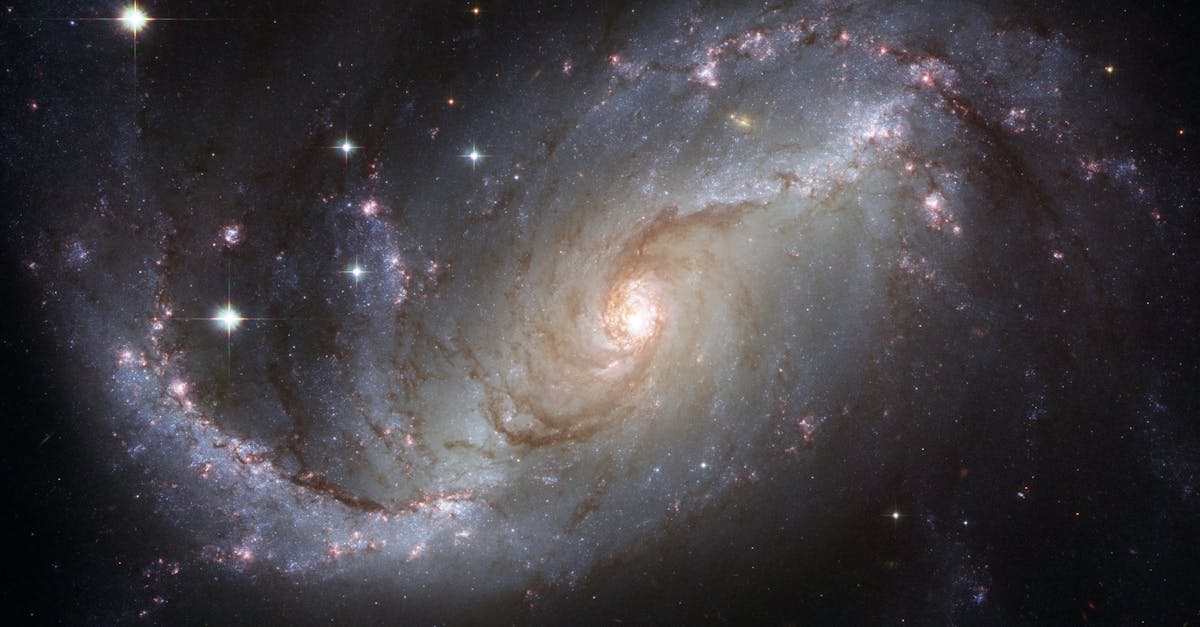
- The James Webb Space Telescope has captured a stunning image of a glowing bridge connecting the dwarf galaxies NGC 4490 and NGC 4485.
- The bridge is a complex structure composed of ionized gas, dust, and star-forming regions.
- The discovery of the glowing bridge has significant implications for our understanding of galaxy evolution and the role of dwarf galaxies in the early universe.
- The bridge provides a unique laboratory for studying the effects of galaxy interactions on star formation and the exchange of gas and metals between galaxies.
Practical Implementation: How to Study Galaxy Interactions with JWST
To study galaxy interactions with JWST, researchers can use a combination of imaging and spectroscopic observations to characterize the properties of the galaxies and the bridge. This can include using the NIRCam and MIRI instruments to observe the galaxy in multiple wavelengths, as well as using the NIRSpec instrument to obtain spectra of the star-forming regions within the bridge. By combining these observations with theoretical models and simulations, researchers can gain a deeper understanding of the physical processes driving galaxy evolution.
Conclusion and Call to Action
The discovery of the glowing bridge connecting NGC 4490 and NGC 4485 is a significant finding that highlights the importance of dwarf galaxies in the early universe. Further study of this phenomenon using JWST and other observatories will provide valuable insights into the formation and evolution of galaxies, and will help to refine our understanding of the role of galaxy interactions in shaping the universe as we see it today. We encourage researchers to explore the possibilities of JWST and to continue pushing the boundaries of our knowledge of the universe.
References
- https://www.space.com/astronomy/james-webb-space-telescope/glowing-bridge-linking-dwarf-galaxies-captured-in-stunning-new-webb-image
- https://iopscience.iop.org/article/10.3847/1538-3881/abf746
- https://www.nasa.gov/mission_pages/webb/main/index.html