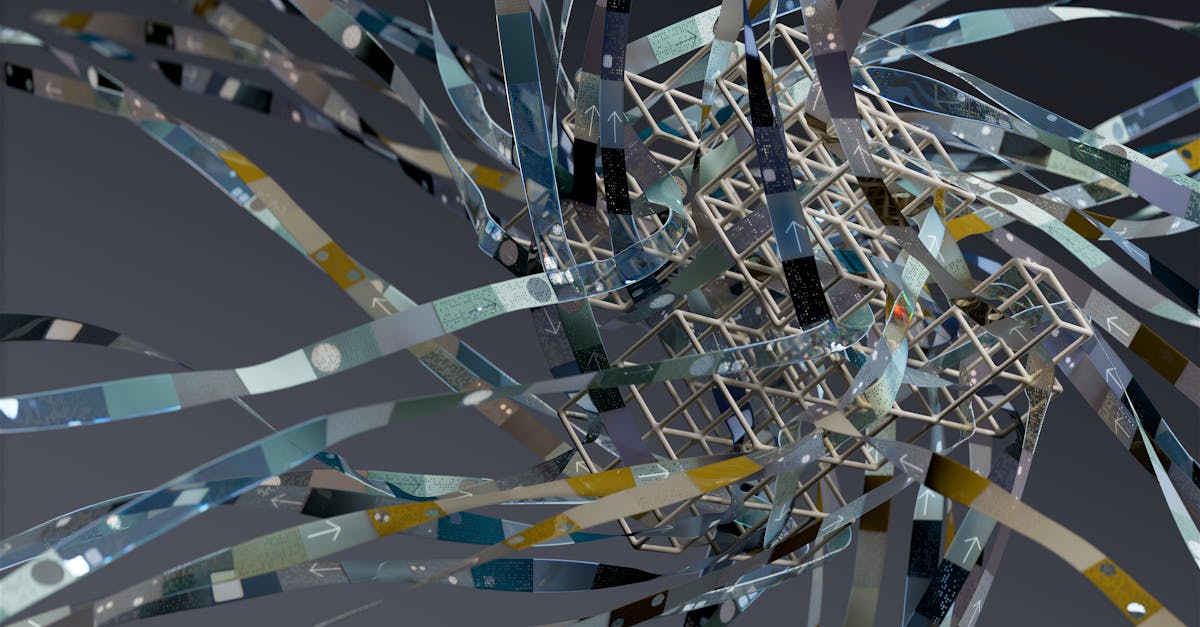
Photo by Google DeepMind on Pexels
Introduction: An Architect Who Redefined the Possible
When Frank Gehry passed away at age 96, the world lost more than a visionary designer; it lost a catalyst for the marriage of architecture, technology, and art. Gehry’s career can be divided into two seismic shifts: the 1970s “ad‑hoc” aesthetic that turned everyday materials like chain‑link fencing into sculptural statements, and the 1990s digital revolution that unleashed the titanium‑clad, curving forms of the Guggenheim Museum Bilbao. Both phases reshaped how architects think about computer‑aided design (CAD), parametric modeling, and the economic power of iconic buildings.
The Early Years: From Chain‑Link to Crumpled Forms
Gehry’s first breakthrough came in the 1970s when he embraced a raw, informal aesthetic. He stripped away the polished International Style and introduced an organic, de‑constructed vocabulary that celebrated imperfection. By using low‑cost materials—such as corrugated metal, plywood, and the ubiquitous chain‑link fence—he proved that architecture could be both expressive and accessible.
- Projects like the Vancouver House (1975) showcased a sculptural approach that felt more like a piece of contemporary art than a building.
- Gehry’s use of industrial fencing turned a simple barrier into a visual metaphor for urban tension.
- The “crumpled” aesthetic hinted at a future where form would be driven by digital simulation rather than static drafting.
These early experiments laid the groundwork for a new design mindset: architecture as a fluid, adaptable medium, ready to be amplified by emerging technologies.
The Digital Leap: Embracing Computer‑Led Design
By the late 1980s, Gehry had partnered with software pioneers to explore three‑dimensional modeling. The advent of tools like CATIA (originally developed for aerospace) allowed him to translate complex, free‑form sketches into precise digital models. This shift was more than a technical upgrade; it was a paradigm shift that opened the door to previously impossible geometries.
Key technological breakthroughs included:
- Parametric design: Variables could be adjusted in real time, enabling endless iterations of curvature and surface texture.
- Digital fabrication: CNC milling and robotic welding turned virtual models into tangible components with millimeter accuracy.
- Visualization: Photorealistic renderings and virtual walk‑throughs gave clients a visceral sense of space before construction began.
The Guggenheim Museum Bilbao: A Case Study in Tech‑Driven Sculpture
Opened in 1997, the Guggenheim Museum Bilbao became the poster child for the new era of computer‑led architecture. Its shimmering titanium skin, sweeping curves, and seemingly impossible cantilevers were all birthed from sophisticated digital workflows. The building’s design process involved:
- Hand‑drawn sketches that captured Gehry’s intuitive vision.
- Translation of sketches into a digital mesh using CATIA.
- Iterative refinement of structural analysis to ensure feasibility.
- Collaboration with engineers, fabricators, and artists to align aesthetic ambition with material reality.
The result was a structure that looked like a “thrashing metallic fish” perched on the Nervión River—part palazzo, part ship, entirely groundbreaking.
The "Bilbao Effect": Urban Regeneration Powered by Iconic Architecture
Beyond its visual impact, the museum sparked an economic renaissance for the once‑declining industrial city of Bilbao. Within two years, the museum generated an estimated $400 million in tourism revenue, revitalized local businesses, and repositioned the city on the global cultural map. This phenomenon—where a single landmark triggers widespread urban renewal—has since been dubbed the “Bilbao Effect.”
Key takeaways from the Bilbao case include:
- Strategic investment in iconic architecture can act as a catalyst for economic development.
- Digital design tools enable architects to create bold, market‑differentiating structures that capture media attention.
- Collaboration between public authorities, private investors, and creative talent is essential for maximizing impact.
Technology, AI, and the Future of Architectural Innovation
Gehry’s legacy lives on in today’s AI‑assisted generative design platforms. Modern software can automatically generate thousands of design options based on performance criteria, material constraints, and aesthetic goals—echoing Gehry’s own iterative, exploratory process. Emerging trends inspired by his work include:
- Generative algorithms: AI creates complex, organic forms that would be impractical to conceive manually.
- Parametric urban planning: Cities use data‑driven models to optimize building placement, pedestrian flow, and energy consumption.
- Digital twins: Real‑time virtual replicas of structures allow architects to test modifications before physical implementation.
These technologies echo Gehry’s belief that “architecture should be a living, breathing experiment.” By pushing the boundaries of what can be modeled, fabricated, and experienced, today’s designers continue his tradition of marrying art with advanced engineering.
Legacy: A Blueprint for Interdisciplinary Collaboration
Frank Gehry’s influence extends far beyond his most famous buildings. He demonstrated that:
- Materials once considered “poor” can become high‑impact design elements when re‑contextualized.
- Digital tools are not just utilities but creative partners that expand the vocabulary of architecture.
- Iconic design can reshape economies, proving that aesthetics and financial viability are not mutually exclusive.
For students, firms, and city planners, his career offers a roadmap: start with bold ideas, embrace technology, and collaborate across disciplines to turn imagination into built reality.
Key Takeaways
- Two Revolutions: Gehry’s 1970s material experimentation and 1990s digital mastery each redefined architectural practice.
- Technology as Enabler: CAD, parametric modeling, and AI have become essential tools for creating complex, expressive forms.
- Economic Power of Design: The "Bilbao Effect" shows that iconic architecture can drive tourism, investment, and urban revitalization.
- Future Trends: Generative AI, digital twins, and data‑driven urban planning continue the legacy of computational design.
- Lesson for Innovators: Bold vision + interdisciplinary collaboration + cutting‑edge technology = lasting impact.
Frank Gehry may have left the physical world, but his influence reverberates through every algorithm that helps shape tomorrow’s skylines.
Source: theguardiantheguardian