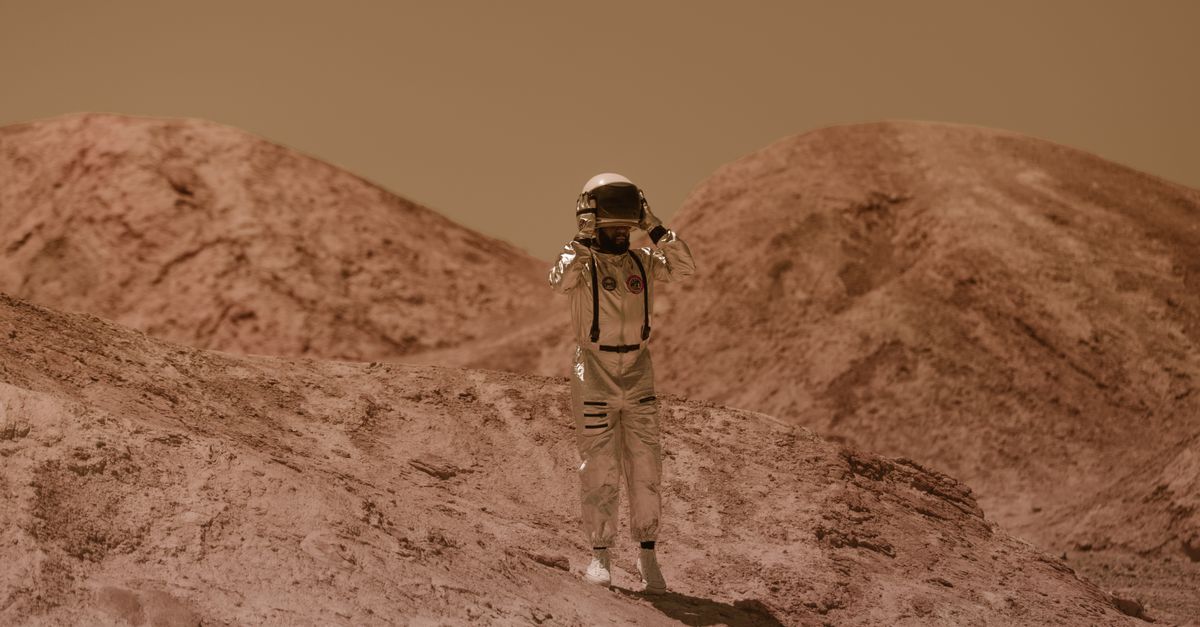
Unlocking the Secrets of Mars: NASA's Perseverance Rover Discoveries and the Search for Life Beyond Earth
For millennia, Mars has captivated humanity, a celestial beacon hinting at possibilities beyond our terrestrial confines. Today, this fascination is fueled by unprecedented scientific exploration, spearheaded by NASA's remarkable Perseverance rover. Launched in July 2020 and landing in February 2021, Perseverance represents the vanguard of our Mars Exploration efforts, meticulously scrutinizing the Red Planet's past to inform its future. This article delves into the profound contributions of the NASA Perseverance Rover, exploring its cutting-edge discoveries, its relentless Search for Life Beyond Earth, and the transformative implications for future human endeavors on Mars.
Perseverance's Technological Arsenal: A Deep Dive into its Instruments
The NASA Perseverance Rover is not merely a vehicle; it is a sophisticated mobile laboratory equipped with an array of advanced scientific instruments designed to probe the Martian environment with unprecedented detail. Each instrument plays a crucial role in the mission's objectives, from geological analysis to atmospheric studies.
Key Instruments and Their Functions:
- Mastcam-Z: A dual-camera system with zoom capability, providing high-resolution panoramic, stereoscopic, and color images and videos of the Martian surface and atmosphere. Essential for geological context and identifying potential sample sites.
- SuperCam: A powerful instrument that uses a pulsed laser to vaporize small amounts of rock and soil, analyzing the resulting plasma to determine chemical composition. It also includes a microphone to record the sounds of Mars, offering unique atmospheric data.
- PIXL (Planetary Instrument for X-ray Lithochemistry): An X-ray fluorescence spectrometer that maps the elemental composition of rocks and soil at a fine scale, crucial for identifying potential biosignatures.
- SHERLOC (Scanning Habitable Environments with Raman & Luminescence for Organics & Chemicals): Uses spectrometers, a laser, and a camera to search for organic molecules and minerals that have been altered by water, key indicators in the Search for Life Beyond Earth.
- MEDA (Mars Environmental Dynamics Analyzer): A suite of sensors that measures temperature, wind speed and direction, pressure, relative humidity, and dust characteristics, providing vital atmospheric data for future human missions.
- MOXIE (Mars Oxygen In-Situ Resource Utilization Experiment): A groundbreaking technology demonstration designed to produce oxygen from the Martian atmosphere's carbon dioxide. This experiment is a critical step towards enabling human missions to Mars by providing breathable air and rocket propellant.
These instruments collectively enable the rover to conduct a comprehensive scientific investigation, pushing the boundaries of planetary science and our understanding of the Martian environment.
Jezero Crater: A Prime Location for Ancient Life
The selection of Jezero Crater as the landing site for the NASA Perseverance Rover was a strategic decision, driven by compelling geological evidence. Located on the western edge of Isidis Planitia, Jezero Crater is a 45-kilometer-wide impact basin that scientists believe once hosted a lake approximately 3.8 to 3.5 billion years ago. This ancient lake was fed by a river that carved a prominent delta structure, a geological feature known for preserving sediments and, potentially, organic molecules.
Why Jezero Crater is Crucial:
- Ancient Lakebed: The presence of a persistent body of water for an extended period suggests conditions potentially favorable for the emergence and sustenance of microbial life.
- River Delta: Deltas are ideal locations for trapping and preserving biosignatures, as they accumulate fine-grained sediments that can protect organic matter from radiation and degradation over geological timescales.
- Diverse Mineralogy: Orbital data indicated a rich diversity of minerals, including carbonates and clays, which are known to form in the presence of water and can preserve signs of past life.
Exploring Jezero Crater allows Perseverance to directly investigate environments that were once potentially habitable, making it a focal point in the Search for Life Beyond Earth.
Groundbreaking Discoveries: Unveiling Mars' Geological and Climatic Past
Since its landing, the NASA Perseverance Rover has delivered a wealth of data, significantly enhancing our comprehension of Mars' complex geological and climatic evolution. The rover's investigations within Jezero Crater have revealed a dynamic past, challenging previous assumptions about the Red Planet.
Key Geological and Climatic Findings:
- Volcanic Rocks and Water Interaction: Perseverance has found evidence of ancient volcanic rocks that have been altered by water, indicating a prolonged period of water-rock interaction. This suggests a more active hydrological cycle than previously understood [1].
- Sedimentary Layers: The rover has traversed and analyzed various sedimentary layers, confirming the presence of an ancient lake and river system. These layers provide a chronological record of the crater's watery past, including periods of both calm deposition and turbulent floods.
- Organic Molecules: SHERLOC has detected organic molecules in several rock samples. While these are not definitive proof of life (organic molecules can form abiologically), their presence in association with water-altered minerals is highly significant for the Search for Life Beyond Earth.
- Atmospheric Data: MEDA has provided continuous, high-resolution weather data, detailing Martian temperature fluctuations, dust activity, and atmospheric pressure changes. This data is invaluable for understanding the current Martian environment and predicting conditions for future missions.
These discoveries paint a picture of a Mars that was once far wetter and potentially more hospitable than it is today, offering crucial context for the quest for ancient microbial life.
The Quest for Biosignatures: Hunting for Evidence of Ancient Microbial Life
The central scientific objective of the NASA Perseverance Rover is to seek out signs of ancient microbial life. This involves identifying potential biosignatures – substances or structures that are evidence of past or present life. The rover's instruments are finely tuned for this intricate task.
How Perseverance Hunts for Life:
- Microscopic Analysis: PIXL and SHERLOC are capable of examining rock textures and mineral compositions at a microscopic level, searching for patterns or structures that might indicate biological activity, such as fossilized microbial mats or mineral precipitates formed by microbes.
- Organic Chemistry: SHERLOC's ability to detect and map organic molecules is critical. While non-biological processes can create organics, certain types, distributions, and associations with specific minerals could point towards biological origins.
- Contextual Geology: The geological setting – particularly the ancient lakebed and deltaic sediments of Jezero Crater – provides the ideal context for preserving ancient microbial life. The rover's ability to understand the depositional environment helps interpret any potential biosignatures.
This meticulous approach is designed to gather compelling evidence that can be further scrutinized in terrestrial laboratories, forming the bedrock of the Search for Life Beyond Earth.
Mars Sample Return Mission: The Next Giant Leap
While Perseverance is equipped with sophisticated instruments, definitive proof of past Martian life will likely require analysis in Earth-based laboratories. This necessitates the ambitious Mars Sample Return (MSR) mission, for which Perseverance is the crucial first step.
The MSR Campaign in Stages:
- Sample Collection: Perseverance is systematically collecting and hermetically sealing rock and regolith (soil) samples in titanium tubes. As of early 2024, numerous samples have been collected, representing a diverse range of geological materials from Jezero Crater.
- Sample Depot: These collected tubes are being strategically deposited on the Martian surface in designated "sample depots," making them accessible for future retrieval.
- Future Retrieval Missions: NASA and the European Space Agency (ESA) are collaborating on subsequent missions to retrieve these samples. This involves a lander carrying a Mars Ascent Vehicle (MAV) and a Sample Fetch Rover (SFR). The SFR will collect the tubes, transfer them to the MAV, which will then launch them into Mars orbit.
- Earth Return: An Earth Return Orbiter (ERO) will rendezvous with the orbiting samples, capture them, and bring them safely back to Earth for unparalleled scientific analysis.
Bringing these Martian samples to Earth will allow scientists to use instruments far more powerful and diverse than anything that can be sent to Mars, providing the best chance to confirm or refute the existence of ancient microbial life and revolutionize our understanding of planetary science [2].
Practical Implications: Paving the Way for Human Exploration of Mars
Beyond the profound scientific quest for life, the NASA Perseverance Rover mission yields invaluable data directly applicable to enabling future human missions to Mars. Every piece of information gathered contributes to mitigating the immense risks and optimizing the strategies for sending astronauts to the Red Planet.
How Perseverance Informs Human Missions:
- Resource Utilization (ISRU): The MOXIE experiment is a direct demonstration of In-Situ Resource Utilization (ISRU), proving that oxygen can be generated from the Martian atmosphere. This is critical for breathable air, life support, and rocket propellant for return journeys, significantly reducing the mass that needs to be transported from Earth.
- Environmental Data: MEDA's continuous monitoring of weather patterns, radiation levels, and dust storms provides essential long-term climate data. This information is vital for designing robust habitats, planning mission timelines, and ensuring astronaut safety against environmental hazards.
- Geological Context for Site Selection: Understanding the geology of Jezero Crater, including water ice distribution (though not a primary Perseverance instrument, it informs broader Mars science), helps identify potential sites for future human landings that offer both scientific interest and accessibility to resources like subsurface water ice.
- Technological Maturation: The successful operation of Perseverance's complex systems, including its autonomous navigation and sample collection mechanisms, contributes to the technological readiness for more intricate human-crewed systems.
The insights gained from Perseverance are not just about ancient microbes; they are about laying the groundwork for humanity's next giant leap into the cosmos, transforming Mars Exploration from robotic reconnaissance to human settlement.
Key Takeaways from the Perseverance Mission
The NASA Perseverance Rover mission has already delivered an extraordinary array of scientific and technological achievements, reshaping our perspective on Mars and the potential for life beyond Earth.
- Ancient Watery Past Confirmed: Strong evidence confirms Jezero Crater once hosted a persistent lake and river delta, making it a prime candidate for past habitability.
- Sophisticated Sample Collection: The rover is successfully collecting and caching pristine Martian samples, a critical first step for the Mars Sample Return mission.
- Technological Readiness for ISRU: MOXIE has demonstrated the feasibility of producing oxygen on Mars, a game-changer for human exploration.
- Detailed Environmental Data: Continuous weather monitoring provides crucial data for designing future human missions and understanding the current Martian climate.
- Organic Molecules Detected: The presence of organic compounds, while not definitive proof of life, warrants further investigation and underscores the potential for biosignatures.
Challenges and the Road Ahead for Mars Exploration
Despite the remarkable successes, Mars Exploration remains fraught with challenges. The harsh Martian environment, characterized by extreme temperatures, radiation, and pervasive dust, continuously tests the limits of space technology. Future missions, particularly the Mars Sample Return campaign, face significant engineering hurdles, intricate orbital mechanics, and the immense cost of interplanetary endeavors.
Looking ahead, the data from Perseverance will guide the next generation of robotic explorers and human pioneers. The focus will shift towards more targeted investigations of potential biosignatures within the returned samples, and the development of sustainable technologies for long-duration human stays. This includes advanced life support systems, radiation shielding, and further development of ISRU capabilities to truly establish a sustained human presence on the Red Planet.
Conclusion: A New Era of Martian Understanding
NASA's Perseverance rover is more than just a marvel of engineering; it is a testament to humanity's insatiable curiosity and relentless pursuit of knowledge. Its mission has profoundly deepened our understanding of Mars' ancient past, revealing a planet that was once dynamic and potentially habitable. The meticulous Search for Life Beyond Earth continues with the collection of precious Martian samples, setting the stage for the unprecedented Mars Sample Return mission.
The data gathered by Perseverance is not merely academic; it is foundational for the ambitious goal of sending humans to Mars, providing critical insights into resource utilization, environmental conditions, and technological requirements. As we await the return of these invaluable samples, the NASA Perseverance Rover stands as a beacon of scientific progress, propelling us closer to answering one of humanity's most profound questions: Are we alone in the universe? The journey to unlock the full secrets of the Red Planet is far from over, and Perseverance is leading the way into an exciting new era of Mars Exploration.
References
[1] NASA. (n.d.). Perseverance Rover's Latest Discoveries. Retrieved from https://mars.nasa.gov/mars2020/news/
[2] European Space Agency. (n.d.). Mars Sample Return. Retrieved from https://www.esa.int/Science_Exploration/Human_and_Robotic_Exploration/Mars_Sample_Return